


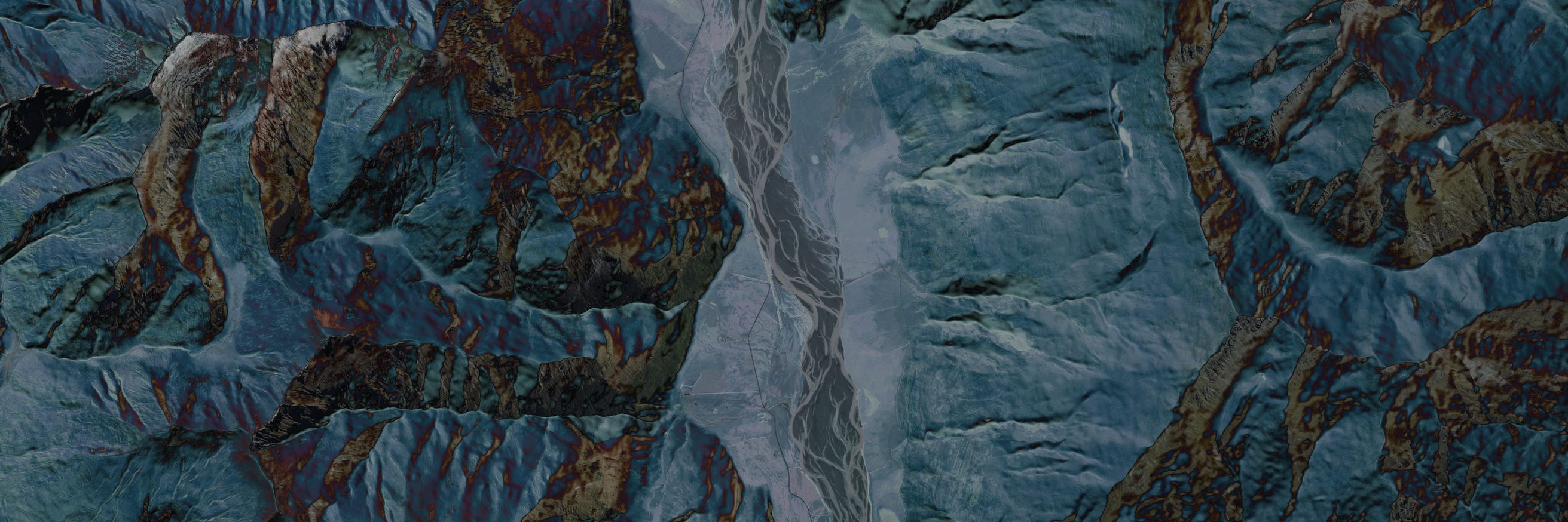
Drops of water rise from the sea and slowly gather in the sky to form clouds that drift across the land. As the air surrounding those clouds cools, tiny crystals form, and, in time, those crystals are released as snowflakes, falling down, down down, until they finally settle on mountain slopes and polar plateaus.
Viewed in isolation, each snowflake is but a blip. But compressed beneath the weight of time, they can transform into layers of ice, forming glaciers that cover the land. And, in this way, each snowflake becomes indistinguishable from the next until millions of snowflakes begin moving as one.
Inch by inch, this unified ice flows forward and backward, responding to the pull of the sea, the heat of the Earth, and changes in the air. As conditions change, the ice eventually gives way to water, and the water droplets flow downslope, through lakes and rivers, back towards the sea.
Then, the cycle begins again.
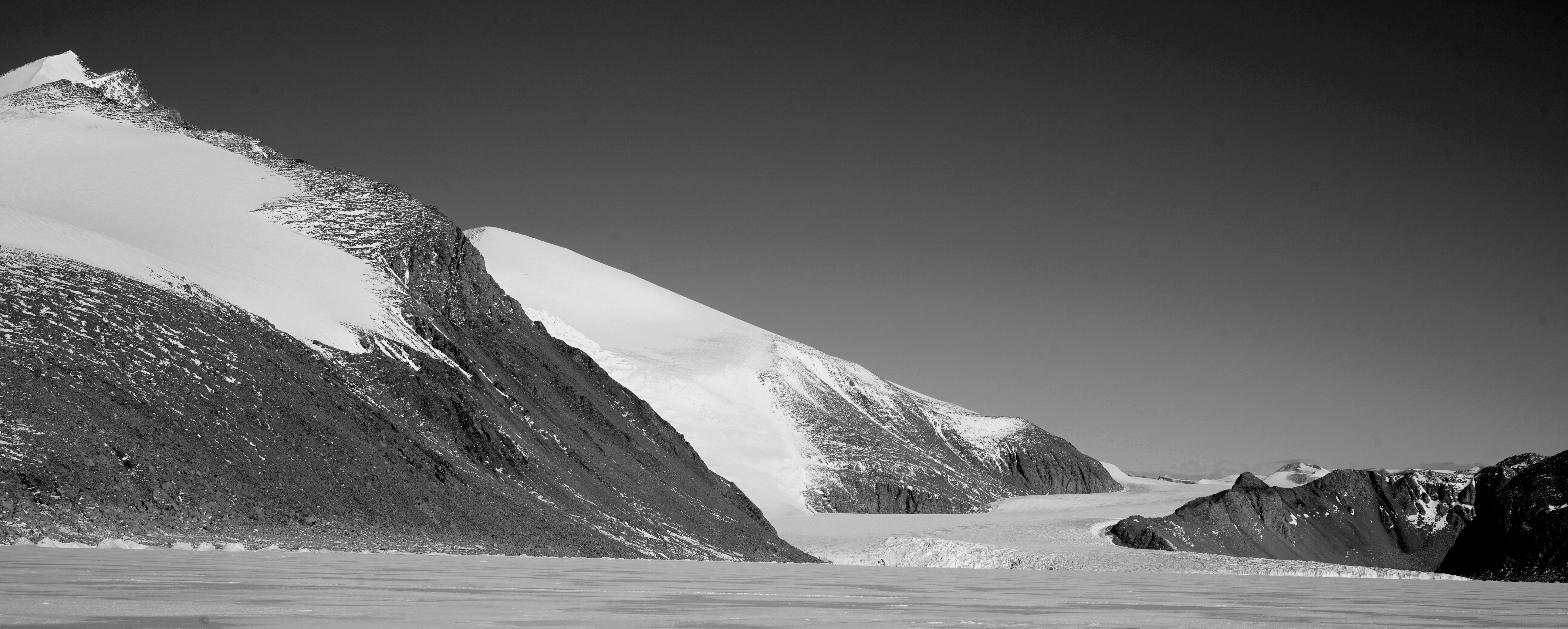
Over scales of Earth time, sheets of ice ebb and flow across the tapestry of our planet. They grind mountains into sediment, excavate valleys, sharpen ridges, and hollow basins. They dominate the land, and then disappear again, leaving traces still visible millennia later, if you look closely enough.
The more time I have spent working in icy landscapes like Antarctica, and studying the history and future of that ice, the more I have begun to see the world around me differently.
Flying over glacial valleys along the Antarctic coastline, the ice seems endless. White stretches across the horizon, interrupted only by isolated peaks and exposed cliff faces that hint at the mountains and valleys hidden beneath. Staring at those fragments of Earth peeking through the ice, I try to envision the landscape below, where stories of its long history lie hidden. Tales from tens of millions of years ago, when dense forests covered the land and warm temperatures persisted even through the polar night. Or remnants of its last warm period, fifteen million years ago, when its coasts were lined with beech trees and its interior was a tundra that closely resembled parts of New Zealand today.
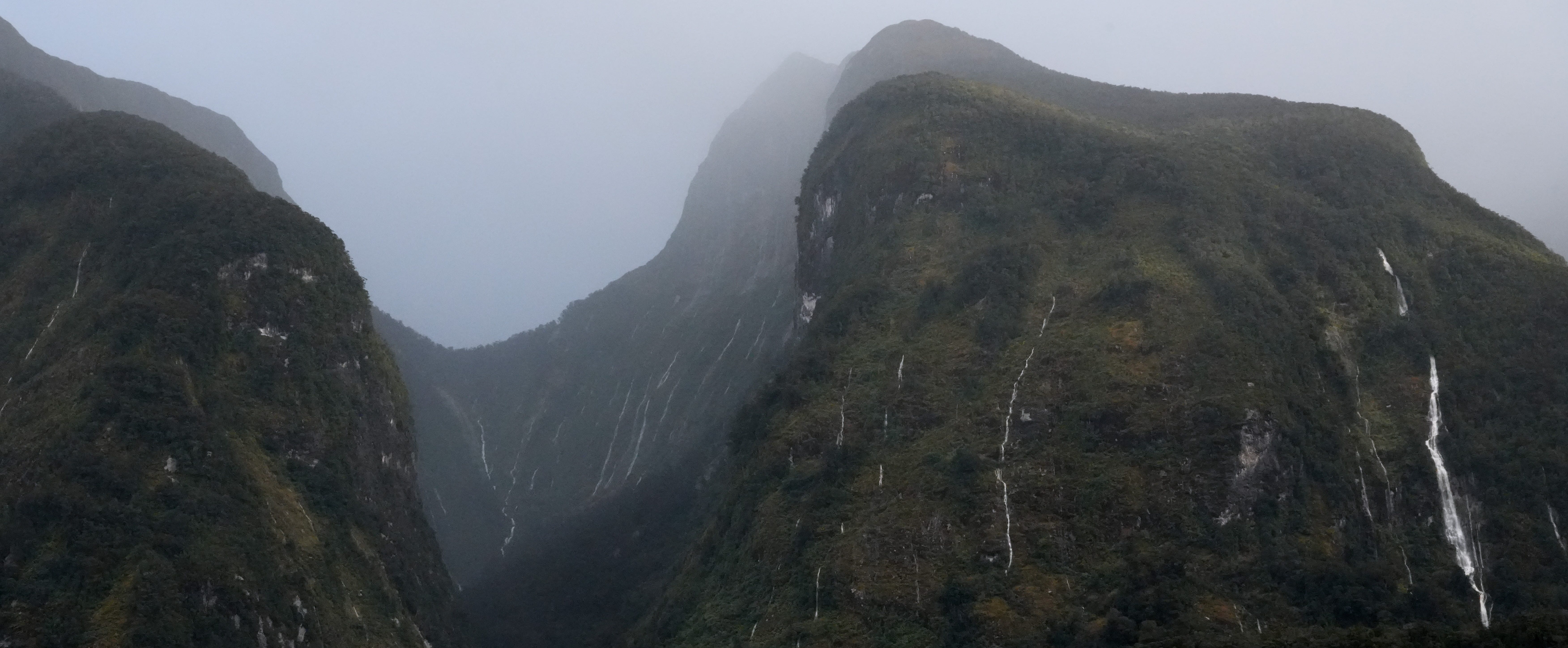
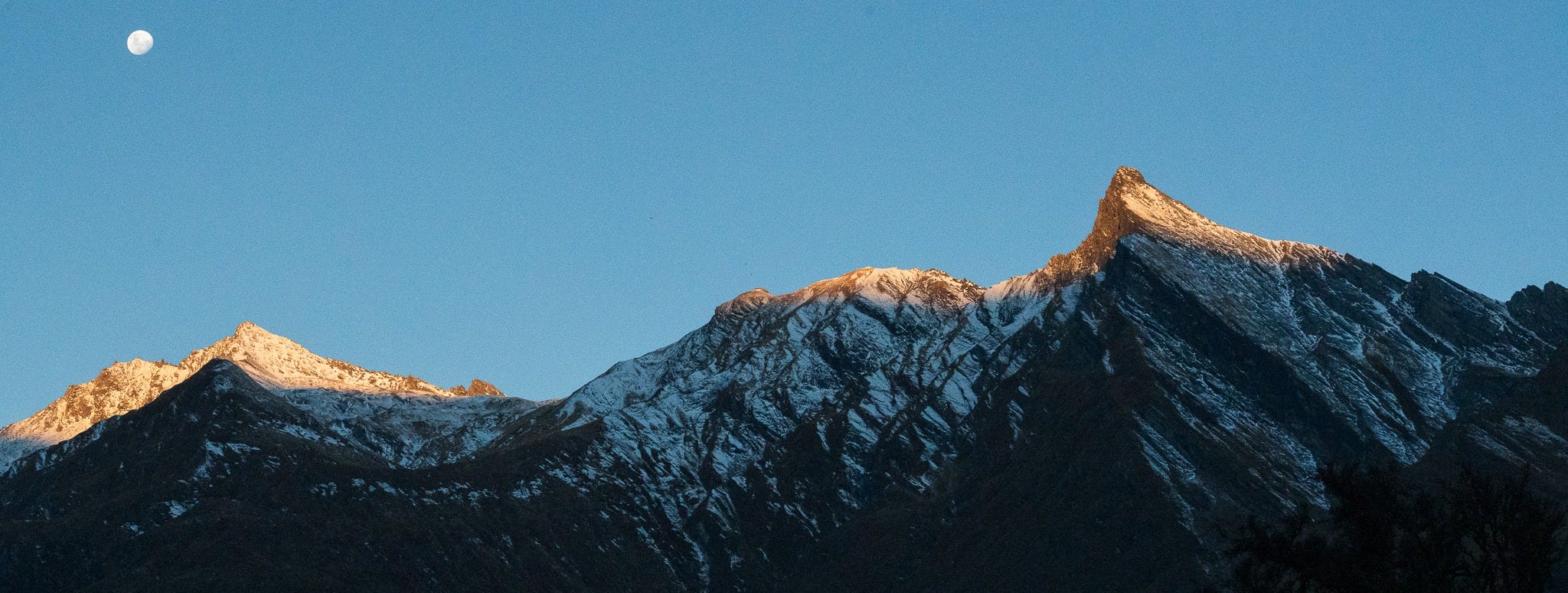
When I come home to New Zealand, I realize I am surrounded by stories of its glacial past, but I am only just learning to recognize them. Sailing through the fjords of Fiordland, I am dwarfed by towering cliffs enclosing valleys carved by glaciers long past. Hiking through the Matukituki Valley, I see the sharp horns and arêtes from where past glaciers compressed the mountain ridges and the cirques on the mountain slopes carved by the head of a glacier long gone. It feels as if the mountains hidden beneath the Antarctic ice are being revealed to me, as the shape of the land and the subtle striations in the rock become reminders of the ice that once consumed this landscape.
As I move between these locations, my mind dances between the two. Antarctica becomes Fiordland’s past, Fiordland becomes Antarctica’s future.
The past, present, and future begin to blur until time no longer feels linear.
Now, whenever I find myself in a landscape shaped by ice, I try to look at it a bit deeper. I ask how it came to be, and look for the stories written into the land. And as I’ve dug into those stories, I’ve realized that to follow a glacier is not simply to follow ice. It is to follow the paths of water that the ice supplies, to understand the ecosystems and societies that have grown around them.
Look at a map of the world, and glaciers appear as the headwaters of civilizations. Trace the meltwater from a glacier, and you eventually find a river. Follow the river, and you find forests, floodplains, farms, fisheries, and cities with millions of people who may never see the glacier that provides the water they live on.
On the Tibetan Plateau, snow that falls onto glaciers eventually becomes the rivers that deliver water to more than a billion people, flowing through Pakistan, China, and Southeast Asia. In Lima, Peru, glacial meltwater from the Andes provides a bridge across arid months for millions of people in one of the world’s largest desert cities. Across Europe, meltwater from the Swiss Alps feeds rivers like the Rhône, sustaining vineyards, cities, and landscapes from the mountains to the Mediterranean.
And, here in New Zealand, glaciers feed braided rivers that irrigate farmland, generate much of our hydroelectric power, and sustain fisheries.
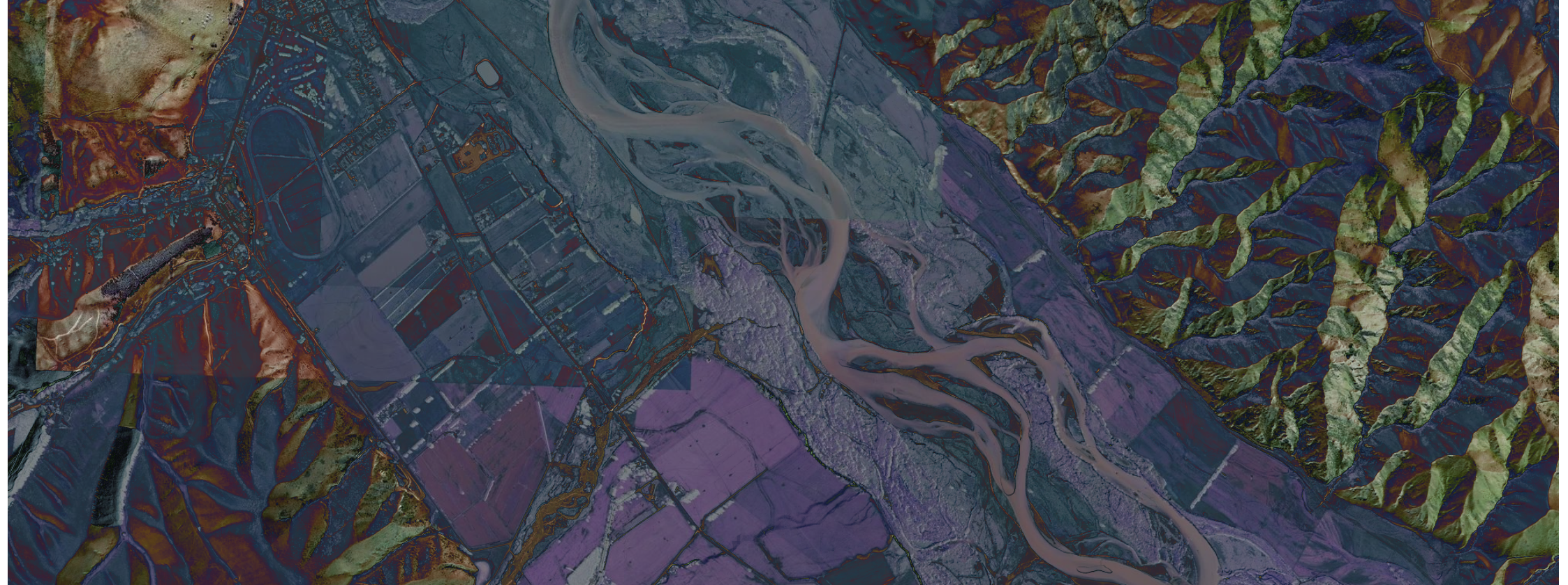
Until recently, I looked out at the landscape of today and just saw what it is, not what it was, or what it could become. I saw the glaciers, and the lakes and rivers that flow from them, but I had not yet learned to recognize the longer story connecting them.
Scientists use the term shifting baseline syndrome to describe the way each generation comes to accept the environment they inherit as normal. What once would have seemed extraordinary gradually becomes ordinary. Now, this happens not just generation to generation, but within our own lives.
Glaciers do not disappear all at once. They retreat metre by metre, season by season, year by year. Most changes on Earth unfold the same way, too gradually for us to notice from one day to the next. Instead, they quietly accumulate until, one day, we look back and realise the landscape has become something else entirely.
When I first moved to New Zealand, I never thought of its glaciers as part of the story of modern change. I saw the Southern Alps as the traces of an ancient ice age, their glaciers the last remnants of a distant frozen past.
But then, stories from those who remembered the glaciers not as they are today, but as they had been only decades before, changed that view.
One of the most iconic pictures of New Zealand is of Tasman Lake. Icebergs drift across its turquoise surface while the glacier terminates high at the far end of the valley, surrounded by steep walls of exposed moraine.
Fifty years ago, that lake did not exist and the Tasman Glacier still filled the valley.
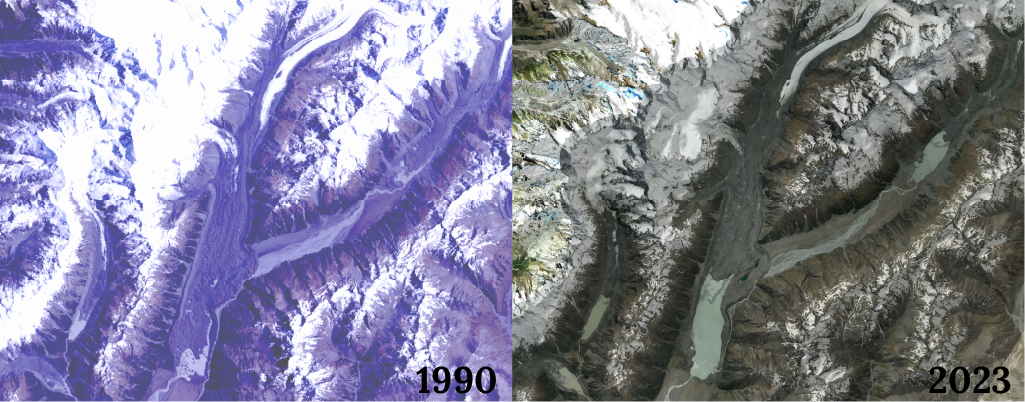
Back then, mountain huts stood perched beside the ice, and you could drive for kilometres along an alpine road next to the glacier. Now, the glacier has retreated up valley by 7 kilometres. The road has crumbled away as the glacial moraines have collapsed, while the huts have been removed or relocated.
The landscape I had accepted as normal had been transformed within a single human lifetime. I had arrived in the middle of a story of rapid glacial retreat without noticing.


In the documentary Chasing Time, photographer James Balog compresses decades into minutes to make these invisible changes visible. By installing time-lapse cameras at glaciers around the world, ice that seemed motionless comes alive, flowing, fracturing, and retreating before our eyes.
Glaciers that had stood for thousands of years were vanishing in mere decades, with only the time-lapse cameras and personal memories as witnesses. Watching these clips, I get goosebumps, feeling the weight of it all in a way I rarely do… even though I spend my time as an Earth scientist immersed in the numbers behind these changes.
Because, even without the data or computer models, the story of change is surrounding us. It is written into the landscapes we walk through every day — we just need to learn to see it.
This was not the ending I had expected when I first started writing this piece, but the process of writing it led me here. To the simple power of noticing. Of pausing for a second, looking around, and really seeing the world we live in. Seeing the forces that shaped it in the past, appreciating the forces sustaining it today, and being mindful of the forces that will shape its future.
Paid subscribers help keep these stories free for everyone, and I'm very grateful for all of you. If you'd like to support future work, you can also leave a tip below.
Video postcard: The braided Matukituki River flowing through old glacial landscapes.
The ghost of a glacier
Walking the paths of glaciers past.
Through forests that inherited their soil, alongside rivers that inherited their valleys.
Traversing ridges sharpened by their passage, climbing above lakes that now fill the deep basins they carved.
The ghost of a glacier remains long after the ice has disappeared, its influence continuing to ripple through the world it left behind.
Such a thought provoking journey this piece takes us on. Time and perspective, and the realization of how they shape our relationship with our environment, have so much to teach us. And the acknowledgement of how this piece ends differently than you anticipated or planned, mirrors the central theme, that what we think we know or experience about a place, is not what the Earth planned, or what we are actually experiencing, but what needs to be honored and valued, for what it is, what it was, and whaat that journey can teach us. 💕